Grove City, OH · Garage Door Service
Garage Door Repair for Westerville's Early-1980s Doors
Westerville homes mostly date to the early 1980s, with steel sectional doors on extension or early torsion hardware. We drive out from Grove City to fix what that era breaks.
- Repairs & new doors
- Springs & openers
- Serving 5 nearby communities
How to Book
We're based in Grove City, about 19 miles from Westerville, so a repair call here gets scheduled as a dedicated trip rather than a drop-in between jobs closer to the shop. Tell us the door's size and roughly how old the house is when you call - most Westerville homes we hear from were built around 1982, which already tells us a lot about what kind of spring and track setup we're walking into before the truck leaves. We don't run a branch or depot in Westerville itself; every job here starts from Grove City, so give us a clear address and a time window rather than expecting a same-hour swing-by. If the door is stuck shut with a car trapped inside, say so up front - that changes how we stage the visit, not how fast we can physically get there.
We cover Westerville as one stop among the towns east and north of Grove City, so booking a specific day works better than asking for emergency same-day service we can't promise from this distance.
Time on the Job
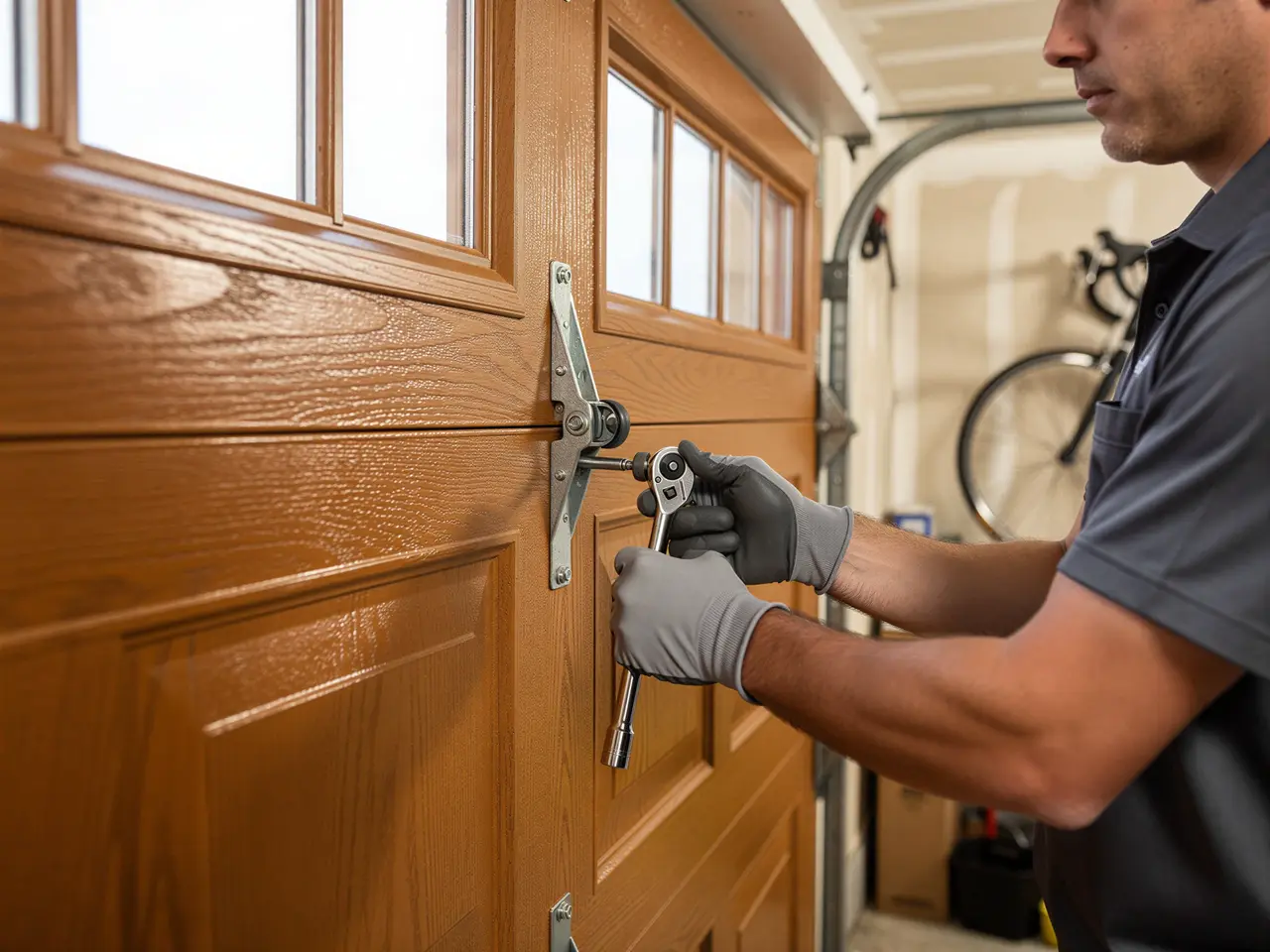
A door from the early 1980s is usually steel sectional, either a single 16x7 or an 8x7, hung on tracks that were standard for that build decade - not the oversized insulated panels you'd see on anything built after the 2000s. Replacing one torsion spring on that setup, with the right spring already on the truck, is usually a job we finish within a couple of hours once we're on-site. If the opener is original to a 1982-era install, though, we're often also dealing with a chain-drive unit that predates modern safety reversal sensors, and that adds time because it's not a like-for-like part swap.
We size the visit around what we find, not a flat number. A worn roller job goes faster than a cable that's come off the drum and bent a track panel, and we won't quote a single number for "how long" until we've looked at the door.
The Symptom
The most common call we get from this part of our service area is a door that's gone heavy on one side - it still opens, but it groans and drags, or the opener strains and reverses halfway up. On a door built when Westerville's housing stock was going up, that's almost always a spring losing tension unevenly, or a cable starting to fray on the drum it rides. Cold stretches hit these doors harder than newer ones; older steel panels and older spring coatings don't handle a hard freeze-thaw cycle the way current double-walled doors do, and this region sits in a climate zone where that matters.
A door that won't move at all, with a loud bang beforehand, is a different story - that's usually a full spring break, and it's not a DIY fix. We'd rather get an honest description of the sound and the moment it happened than guess from a vague "it's broken."
Stocked Parts
We carry torsion springs sized for the standard single and double doors that match Westerville's 1982-median building stock, along with rollers, cables, and standard track sections that fit that era's hardware. What we don't always have on the truck is a part for an opener that's original to the house - a chain-drive unit from that period sometimes uses a gear or a logic board that's been out of production a long time, and in that case we're ordering rather than fixing it same-visit.
That's the honest limitation: if your opener is the original unit from when the house was built, don't assume we can swap a part on the spot. We'll tell you straight whether it's a stocked fix or a special order before we start, rather than stringing the visit out.
The Cost of This Job
Westerville's households run a higher median income than the broader Grove City service area - just over $107,000 against $87,018 area-wide - and that shows up less in what we charge and more in what homeowners ask for: full door replacements instead of patch repairs, and insulated upgrades over the original steel panel. A repair on a door built around 1982 is often cheaper than replacement simply because the hardware is straightforward and the parts are common sizes we already stock.
We won't push a full replacement when a spring and a set of rollers will get another decade out of the door. But if the panels are dented, the track is bent, and the opener is original, replacing the whole unit at once sometimes costs less in the long run than three separate service calls.
Frequently asked questions
Do you have a crew based in Westerville?
No. We work out of Grove City and drive to Westerville for every job, about 19 miles each way. That means we schedule visits rather than offer instant same-hour arrival, so it helps to book ahead when you can rather than waiting for the door to fail completely.
Why does my 1980s door sound different in winter?
Older steel panels and springs don't flex the same way in a hard freeze as newer insulated doors do. This area sits in a severe cold climate band, and a spring that's already losing tension tends to show it first on a cold morning - slower movement, more strain on the opener, sometimes a grinding sound at the top of the track.
Is it worth repairing a door this old or should I replace it?
Depends what's wrong. A spring, cable, or roller job on a straightforward 1980s-era door is usually the cheaper and faster fix. If the opener is original and failing too, or the track is bent along with a panel, replacing the whole door at once can make more sense than paying for separate repairs over time.
More garage door services in Westerville
Book garage door service in Grove City
Call now or request a quote - tell us what the door is doing and where you are.