
Grove City, OH · Garage Door Service
Why Drafts Show Up Around Grove City Garage Doors
Grove City homes built mostly in the 1960s-70s have original door seals never meant for this cold climate; here's what drafts actually mean for your garage.
- Repairs & new doors
- Springs & openers
- Serving 5 nearby communities
What Is Going On
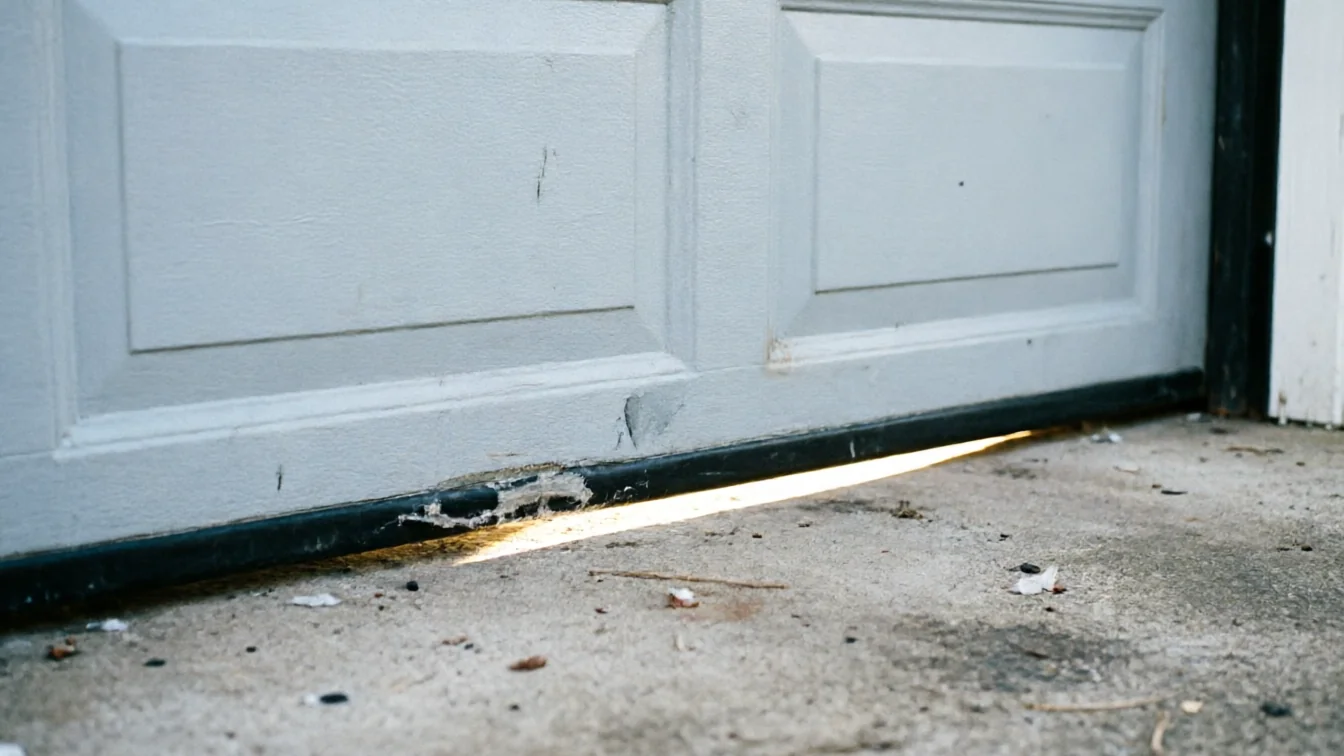
Most garage doors in the Grove City service area were installed on houses built between 1938 and 2006, with the bulk of that stock going up in the 1960s and 70s. That matters because the bottom seal, side seals, and top weatherstrip on a door that old were sized for a rubber compound that has long since hardened and shrunk. You feel it as a draft along the bottom corners first, usually the side nearest the driveway slope, because that's where the seal has the most gap to cover and the least flex left in it to cover it.
This isn't a defect in the door. It's just rubber doing what rubber does after forty or fifty winters. The track and panel underneath are often fine. The seal is the part that gave up first, and it's also the cheapest part to replace, which is the one piece of good news in this whole topic.
If your house falls into that 1960s-70s band common across the area's older neighborhoods, assume the factory seal is well past its working life even if nobody's touched the door in years. A seal doesn't fail all at once - it goes stiff, then cracks at the corners, then stops sealing at all, and most owners don't notice until a cold morning makes it obvious.
What Most People Get Wrong
The common mistake is treating a draft as an opener problem or a balance problem, when it's almost always a seal problem. People hear air moving and assume the door isn't closing all the way, so they adjust the limit switch or add force to the opener. That doesn't fix a gap - it just makes the door close harder against a seal that's already too stiff to compress, which can crack the bottom panel over time.
The other mistake is buying a generic replacement seal without checking the track width. Houses built across the area's 1976 median often have track and jamb dimensions that don't match what's sold off the shelf at a big box store today. A seal that's slightly the wrong profile will look installed but won't actually close the gap at the corners, which is exactly where the draft was coming from in the first place.
We don't recommend caulking around a door frame as a draft fix. It's a reasonable thing to do on a wall, not on a moving door, and it tends to trap moisture against wood trim that's already decades old in this area. The honest fix is almost always the seal itself, not the frame around it.
What Local Conditions Do
This area sits in a cold climate band with real seasonal severity, not just occasional cold snaps. That means the rubber in an old seal goes through a wider temperature swing every year than it would somewhere milder - soft in July, brittle in January - and that cycle is what cracks a seal faster than age alone would. A seal that might last fifteen years in a mild climate often doesn't make it past ten here.
Cold also changes how a door behaves mechanically. Steel panels contract slightly, hardware gets stiffer, and a door that closed flush in September can show a visible gap by February simply because the metal has shrunk and the worn seal can't take up the slack anymore. That's why draft complaints in this area cluster hard in the coldest months even though the seal itself has been failing gradually all year.
We can't change what a Grove City winter does to a forty-year-old seal. What we can do is match the replacement to the actual gap the cold is creating, instead of guessing at a size and hoping it holds through February.
What to Check
Start at the bottom corners, not the center. On a door this old, the center of the bottom seal usually still compresses fine; it's the last six inches on each side where the rubber has pulled away from the concrete. Run your hand along the gap on a cold morning and you'll feel the air move exactly where the seal has lost contact.
Next check the side seals where the panel meets the track. If light shows through in a line rather than a few small gaps, the seal has flattened along its whole length, not just failed at one spot - that's a full replacement, not a patch.
Last, check the top weatherstrip where the door meets the header. It gets ignored because it's out of sight, but on houses from the area's older stock it's often the most brittle piece, since it rarely gets touched during normal maintenance.
One limitation worth saying plainly: a new seal won't fix a door that's out of square or a track that's bent. If the gap is uneven rather than a consistent line, that's a hardware issue, and no amount of weatherstripping will solve it.
Frequently asked questions
Why does my garage door only draft in the winter?
It's usually not seasonal in cause, just in visibility. The seal has been losing flexibility for years; cold temperatures shrink the steel panel slightly and stiffen the rubber further, so a gap that was marginal in summer becomes obvious by January. The underlying wear was already there.
How do I know if it's the seal or the opener?
Watch the door close from outside. If it reaches the floor and stays shut but you still feel air at the corners, it's the seal. If the door visibly stops short of full contact with the floor, that's a balance or limit setting issue, which is a different repair.
Is a draft worth fixing or just a minor annoyance?
In a cold climate like this one, an unsealed gap lets conditioned or ambient garage air escape all winter, and it can let moisture in that affects anything stored near the door. It's a cheap fix relative to what a drafty garage costs you in heating a space above it.
Related garage door services in Grove City
More garage door guides
Book garage door service in Grove City
Call now or request a quote - tell us what the door is doing and where you are.