Grove City, OH · Garage Door Service
Garage Door Panel Replacement for Grove City Homes
Grove City homes built between 1938 and 2006 often need a dented or rusted garage door panel replaced. See why this fails and what the job actually involves.
- Repairs & new doors
- Springs & openers
- Serving 5 nearby communities
What Causes It Around Here
Houses across this service area went up anywhere from 1938 to 2006, but the median build year lands at 1976, and the bulk of what's actually on the ground is 1960s and 70s construction spread across the 23 named communities we work in. That era of garage door came with steel panels that are thinner than what gets installed today, and a lot of them were never swapped out when the opener or the springs got replaced over the years.
Add a cold-severe climate band on top of that and you get a specific failure pattern: steel skins that flex with every freeze-thaw cycle until the seam between the outer skin and the frame starts to separate. Rust takes hold at the bottom panel first, usually where road salt and slush sit against the metal all winter, then works upward. On a 1970s door, that bottom panel is often the only piece of the door still original, because it takes the most abuse and fails first. The rest of the door - track, springs, opener - can be fine while one panel is the only thing actually bad.
Where This Job Goes Sideways
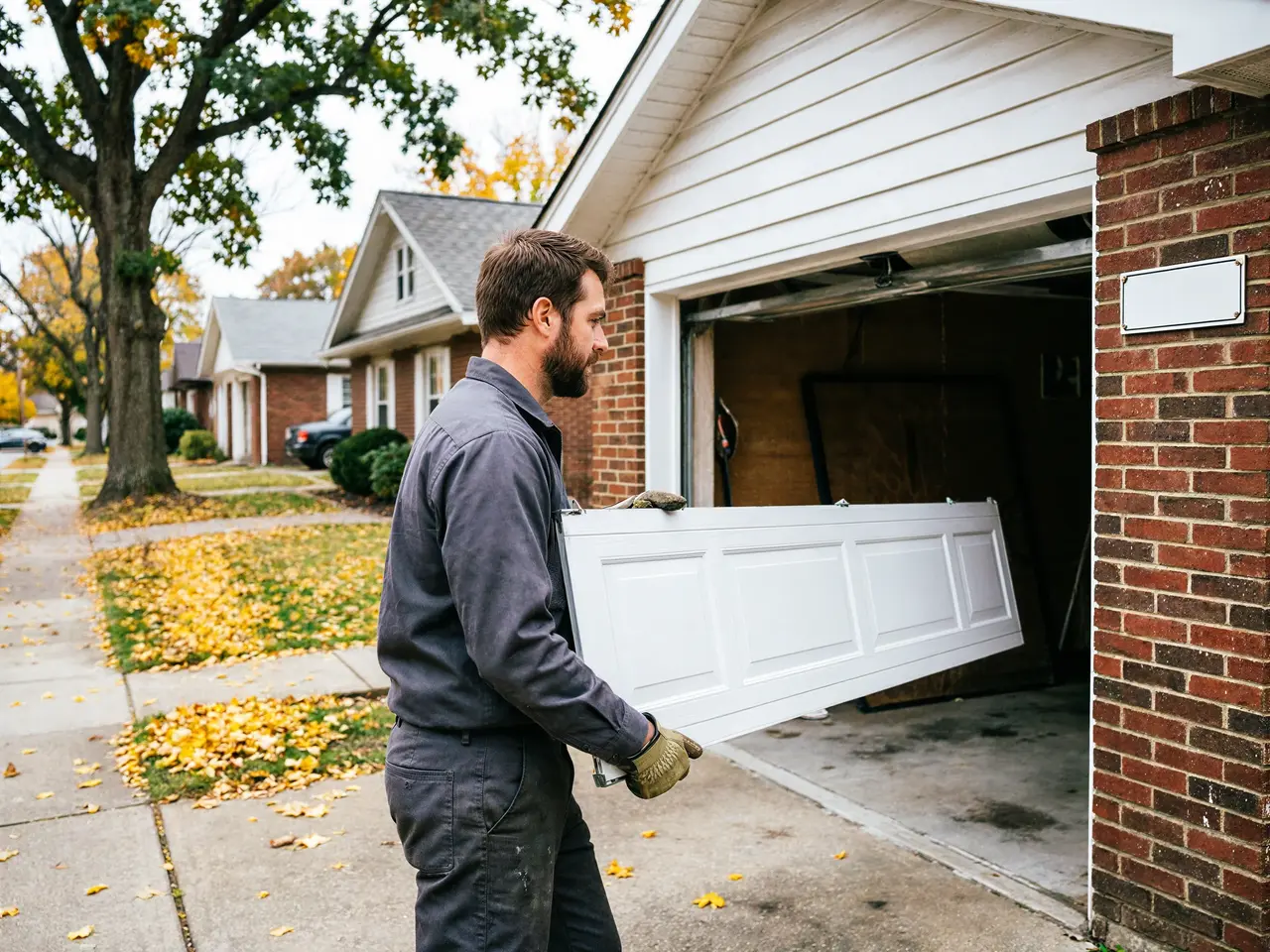
The straightforward version of this job is: one panel is dented or rotted, the rest of the door is sound, you order a matching panel and swap it. The version that goes sideways is when the door is old enough that the manufacturer doesn't make that panel profile anymore, or the color run has changed enough that a new panel next to 40-year-old panels looks like a patch job no matter what you do.
With stock this old - median build year 1976, most of it 1960s-70s vintage - exact-match panels aren't always available off the shelf. Sometimes we can source a close match from a different model line and it looks fine once it's painted. Sometimes the honest answer is that a single-panel repair isn't worth doing and the whole door needs to go. We tell owners that up front rather than install a panel that'll bug them every time they pull into the driveway.
The other place this goes wrong is track alignment. Pull one panel out of an old sectional door and the remaining panels can bow slightly out of true, especially if the door's been racked from an opener that's been straining on a bad spring for years. That's a bigger job than it sounds like from the driveway.
Doing It Yourself
A single bottom panel on a newer sectional door, with standard hinge spacing and no spring work involved, is a job some owners handle themselves with a weekend and the right fasteners. That's the honest limit of it.
Where DIY gets risky on this housing stock is anything built before the mid-80s, where hinge spacing, track width, and panel height don't always match current hardware without some fabrication. You can get a panel bolted in and have a door that doesn't travel straight on the track, which wears the rollers and the opener faster than the rust did. And if the panel swap means disturbing the torsion spring or the cables to get the section out, that's not a DIY repair - a wound torsion spring can break a hand or worse, and we're not going to pretend otherwise to sell a job. If you're not sure which category your door falls into, that's worth a call before you start pulling fasteners.
The Symptom
Most owners notice this one of three ways. There's the visible dent or crease, usually from a trailer hitch or a bike handlebar, which is cosmetic until it starts letting daylight or weather through the seam. There's rust blooming at the bottom edge of a panel, which on this area's older stock usually means the galvanized coating wore through years ago and the steel underneath has been sitting wet every winter since. And there's warping - a panel that's slightly bowed so the door doesn't seat flush against the weatherstrip anymore, which you'll feel as a draft in the garage before you ever see it.
Any of those three is a panel problem, not a spring or opener problem, and it's usually fixable without touching the rest of the door - unless the warping has already started pulling at the track, in which case the panel is the symptom and the alignment is the actual job.
Frequently asked questions
Can you match the panel color on an older door?
Sometimes. Panel profiles and paint runs change over the decades, so a door from the 1970s or 80s may need a close match rather than an exact one. We'll tell you honestly whether a new panel will blend in or stand out before you commit to the job.
Is it cheaper to replace one panel or the whole door?
Depends on the door's age and how many panels are affected. One damaged panel on a sound door is usually the cheaper fix. If the door is old enough that matching parts are scarce, or more than one panel has failed, full replacement can end up being the more sensible spend.
Why does the bottom panel rust out first?
It sits closest to melting snow, slush, and road salt all winter, so the galvanized coating wears through there before anywhere else on the door. Once rust starts at the bottom seam, it spreads upward if it's not addressed.
Related services
By Neighborhood
Panel Replacement across the Grove City area
We also handle panel replacement in these Grove City-area suburbs.
Book garage door service in Grove City
Call now or request a quote - tell us what the door is doing and where you are.