Grove City, OH · Garage Door Service
What a Service Call Actually Covers in Grove City
A straight breakdown of what a Grove City Garage Door Pros service call includes, built around this area's 1960s-70s housing stock and cold-climate wear patterns.
- Repairs & new doors
- Springs & openers
- Serving 5 nearby communities
What Is Going On
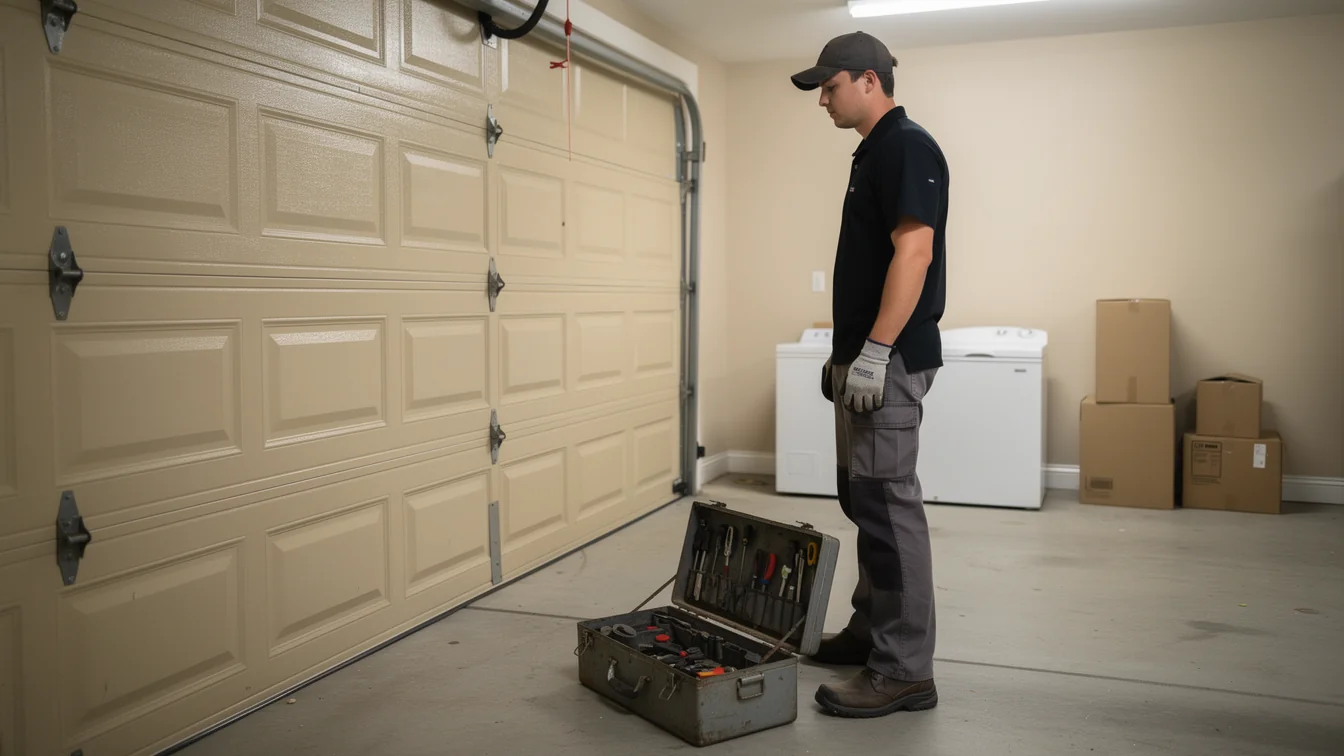
When you call us about a garage door that's sticking, grinding, or won't open, the visit isn't a guess-and-replace job. A service call means a tech comes out, runs the door through a full cycle, and checks the spring tension, the track alignment, the opener's force settings, and every roller and hinge along the panel seams. Most of the houses we work on in this area were built between 1938 and 2006, with the bulk going up in the 1960s and 70s. That matters because a door installed on a house built in 1968 has different hardware, different spring sizing, and often a different mounting style than one installed in 2001. We're not running a script. We're looking at what that specific door, on that specific house, has been doing for the last several decades. Sometimes the fix is a ten-minute adjustment. Sometimes it's telling you the opener is original to the house and the circuit board is the real problem, not the chain. A service call is the diagnosis - the repair is a separate conversation once we know what's actually wrong.
What Most People Get Wrong
The most common mistake is assuming a noisy door means a bad opener. Nine times out of ten, the opener is fine - it's the rollers or the track bracket that's loose. Because so much of this area's housing stock dates to the 1960s and 70s, we see a lot of original steel rollers that have run dry for forty-plus years, and homeowners replace the whole opener before anyone's checked whether the rollers were ever lubricated. Another one: people wait until a spring fully snaps before calling. On a house with the original torsion hardware from that era, a spring under tension that's already stretched or rusted is a bigger safety issue than people think - it's not a 'wait and see' part. We also hear homeowners say they want the 'same brand' replacement spring without knowing their door's weight or cycle count changed if they ever swapped to an insulated panel. A service call fixes the misdiagnosis before it costs you a second part. We'd rather tell you it's a $20 roller than sell you an opener you didn't need.
What Local Conditions Do
This area sits in a severe cold climate band, and that shows up in garage doors in specific ways. Steel contracts in cold temperatures, which tightens tolerances on tracks that were already sized decades ago for houses built in the 1976 median year of this housing stock. A track that ran fine in August can bind in January because the metal shrank just enough to catch on an old bracket. Torsion springs also lose a measurable amount of lift strength as temperatures drop, so a spring that was marginal in fall can leave a door feeling noticeably heavier - or refusing to lift at all - once winter sets in. Weatherstripping on older doors hardens and cracks faster here too, letting cold air in and making the opener work harder on every cycle. None of this is dramatic, but it's cumulative: a house with a door from the 1970s has had forty-plus winters of that contraction-expansion cycle on the same hardware. A service call in this climate isn't just about what's broken today - it's about what the cold is doing to parts that were never designed to last fifty winters.
What to Check
Before you call, there are a few things worth looking at yourself. Stand under the door and look at the torsion spring above the header - if you see a visible gap or rust along the coils, don't touch it, but mention it when you call. Check the rollers at the bottom panel; if they're the original steel type common on houses built in the 60s and 70s era, listen for a grinding sound as the door moves, which usually means they're dry or worn flat on one side. Look at the weatherstripping along the bottom edge for cracking or gaps - in a severe cold climate, a bad seal lets in more cold air than most people expect. Test the auto-reverse safety feature by placing a block of wood in the door's path; it should stop and reverse on contact. If your opener is original to a house from that mid-century stock, the force settings may never have been adjusted since install, which strains the motor every single cycle. We can't inspect hardware we can't see over the phone, so the honest answer to 'is it serious' is usually: let a tech look at it before you decide.
Frequently asked questions
How much does a service call cost?
We don't have a posted flat rate to quote here, and it depends on what the door needs once a tech looks at it. What we can tell you is the visit includes a full diagnostic - spring tension, track, opener force, rollers and hinges - before any repair work is quoted separately.
Why does my garage door get harder to lift in winter?
This area sits in a severe cold climate band, and torsion springs lose measurable lift strength as steel contracts in cold temperatures. A spring that felt fine in September can leave the door noticeably heavier by January, especially on older hardware.
My house was built in the 1970s - does that matter for repairs?
It does. A lot of the housing stock in this area dates to the 1960s and 70s, and doors from that era often run original torsion hardware and rollers that current parts weren't sized for. We check the actual hardware on site rather than assuming a modern fit.
Is a loud, grinding door always the opener?
Usually not. Most of the time it's dry or worn rollers, not the opener itself. We see this often on older doors where the original steel rollers have never been lubricated or replaced.
Related garage door services in Grove City
More garage door guides
Book garage door service in Grove City
Call now or request a quote - tell us what the door is doing and where you are.